AI agents work best on a solid data foundation
AI agents go beyond answering questions: they watch the data, spot problems and take action. They only work well on data that is clean, agreed and checked.
Here are some examples of agents you can put in place once your team has completed the 10 stages of the roadmap.
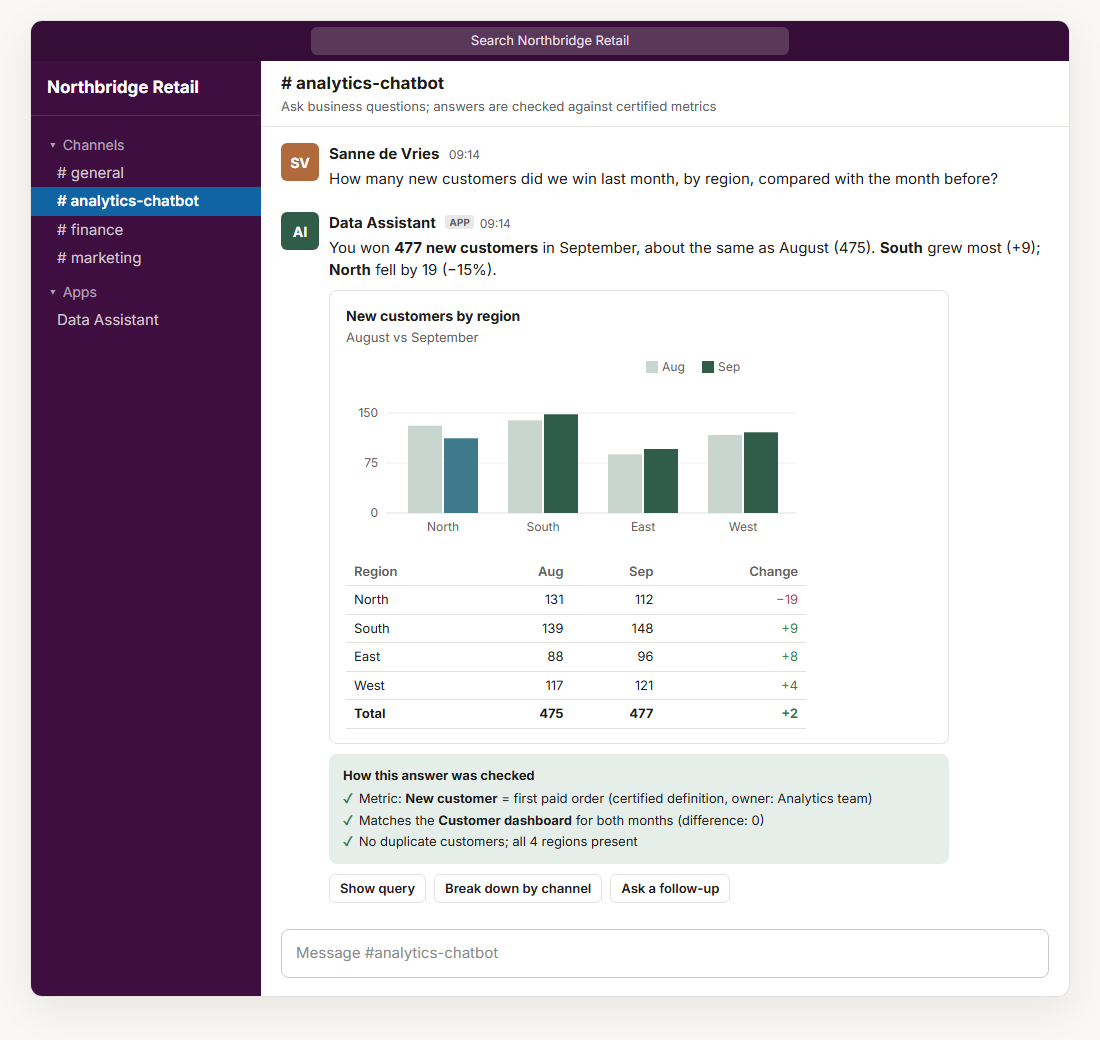
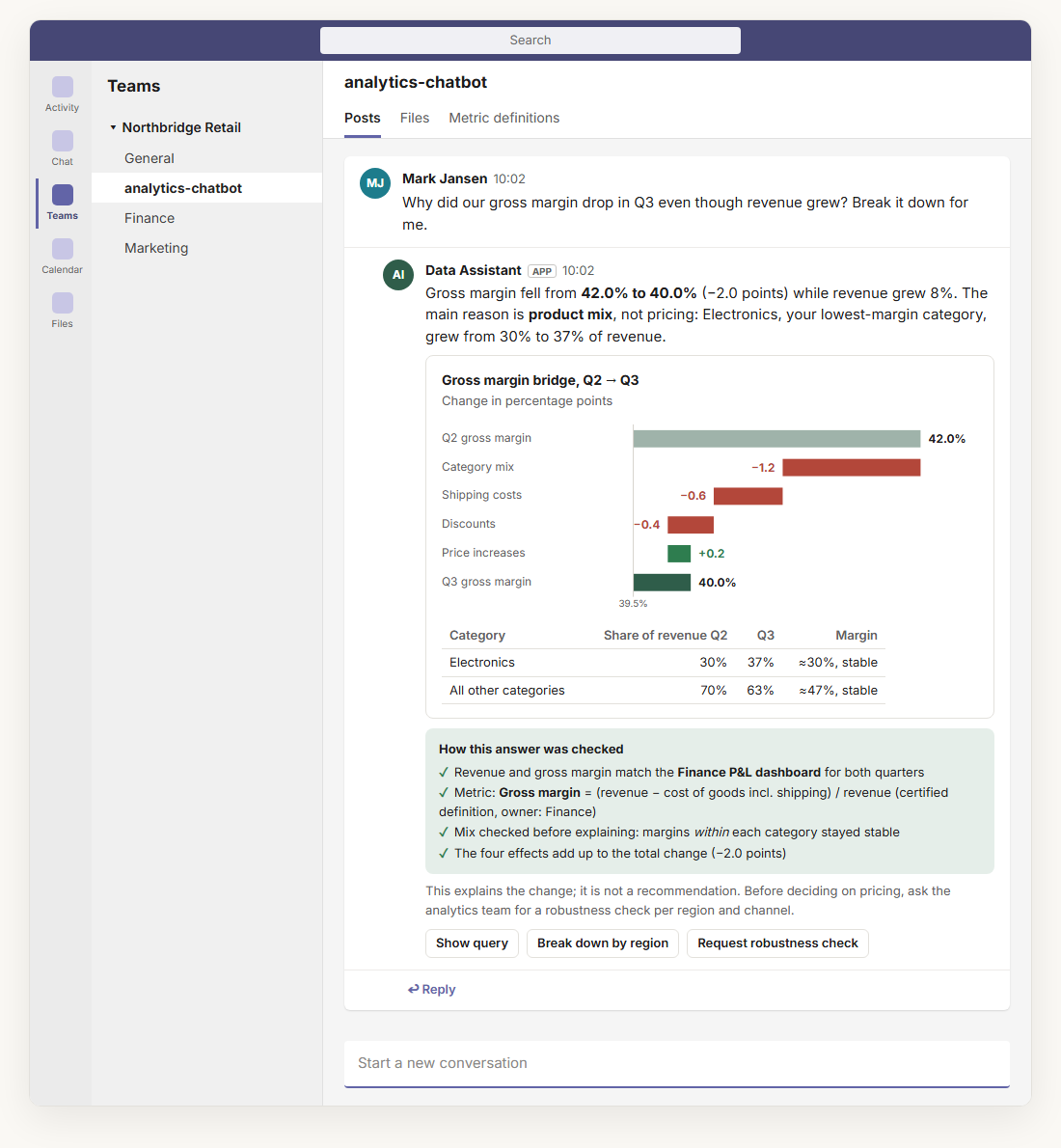
Data chatbot: ask in Slack or Microsoft Teams
Stakeholders ask a business question in the chat tool they already use. The agent answers with a chart and a table, and shows how the answer was checked against certified metrics.
How every agent works
Grounded in one semantic layer
Every agent reads the same agreed metric definitions and context, so its answers match your reports.
People stay in control
For critical operational steps, such as issuing refunds, sending client emails or reordering inventory, agents draft or recommend, and a person approves. No unmonitored autonomy.
Full auditability
The system records a step-by-step audit trail of why an agent made a decision or recommendation, so you can always see how it got there.
Other AI agent examples
The number of possible AI agents is endless. Which ones make sense depends on the business you run.
Sales & marketing
| Agent | What it does | Then |
|---|---|---|
| Reduce customer churn | Combines CRM data, product usage, support tickets and contract end dates to spot accounts at risk of leaving, such as falling usage or an approaching renewal. | Drafts a check-in for the account owner and creates the follow-up task. |
| Identify high-potential customers early | Spots new customers who look like your biggest accounts, based on signals such as company size, early product usage and how quickly they expand. | Assigns a dedicated contact and starts a white glove onboarding checklist. |
| Qualify and prioritize leads | Scores incoming leads using CRM history, product activity and company data, and flags the ones most likely to buy. | Routes each lead to the right owner and drafts a personalized follow-up for the sales rep to review. |
| Watch marketing spend | Flags campaigns where the cost per customer suddenly spikes, so budget isn't burned for a week. | Pauses an underperforming campaign or moves budget within limits you set. |
Finance and operations
| Agent | What it does | Then |
|---|---|---|
| Find revenue leakage and billing errors | Flags invoices that don't match contracts, missed renewals, or unusual refunds and discounts. | Drafts the corrected invoice and routes it to finance for approval. |
| Flag fraud and unusual activity | Scans orders, payments or accounts for unusual patterns in the standard tables. | Holds the order and opens a case with the evidence attached, for a person to decide. |
| Extract unstructured data from documents | Reads contracts, invoices, receipts and support logs, and turns them into structured, validated data. | Sends the structured data to the right system and flags anything it couldn't read for a person to check. |
| Inventory and demand forecasting | Forecasts demand from point-of-sale data, seasonal trends, supplier lead times, and external market and weather data, and flags products at risk of running out or overstocking. | Drafts the reorder recommendation for a person to approve. |
Business monitoring & reporting
| Agent | What it does | Then |
|---|---|---|
| Catch KPI problems early | Watches your certified KPIs every day, notices when one moves in an unusual way, and checks the likely causes with the same checks your team trusts. | Opens an incident, tags the metric's owner and posts a root-cause summary. |
| Send a weekly business digest | Summarizes the biggest movements in your key numbers every Monday, and why, so leaders don’t have to go hunting. | Sends it to the right people and sets up a follow-up where something needs a decision. |
| Watch data quality | Checks that data arrives complete and on time. | When something breaks, quarantines the bad data, re-runs the failed pipeline and opens a ticket for data engineering with what failed and where. |
| Keep reports and documentation current | Builds your recurring reports and business review decks, and tracks when the underlying data changes. | Sends the reports to the right people, and opens definition and documentation updates for review. |
What agents need first: all 10 stages of the Roadmap in place. Once that is accomplished, start with agents that alert and recommend, and let them act on their own only after they have earned trust. See the Roadmap.
Which agent would help your team?
Book a free 30-minute call to look at where your data stands and what an agent could take off your plate.